
Be wAIHA wise!
If your healthcare provider has not asked about your fatigue in detail, consider bringing it up at your next appointment. You may also want to ask about the FACIT-Fatigue Scale.

What are the results?
A 24-week clinical study explored the effectiveness and safety of IMAAVY in adults living with warm autoimmune hemolytic anemia (
*Placebo: In a clinical study, this is the group that does not receive the medicine that is being tested.
They were adults who:
To achieve improved
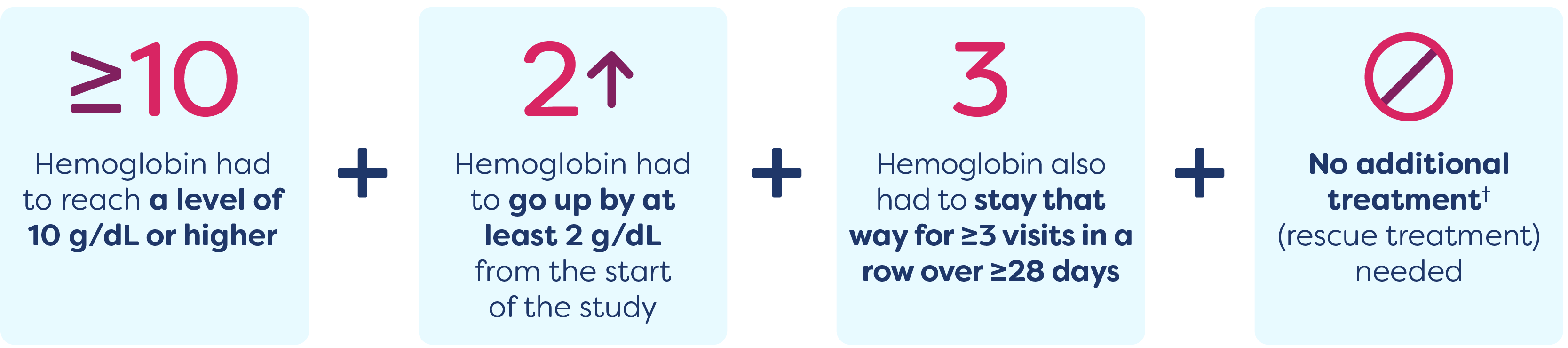
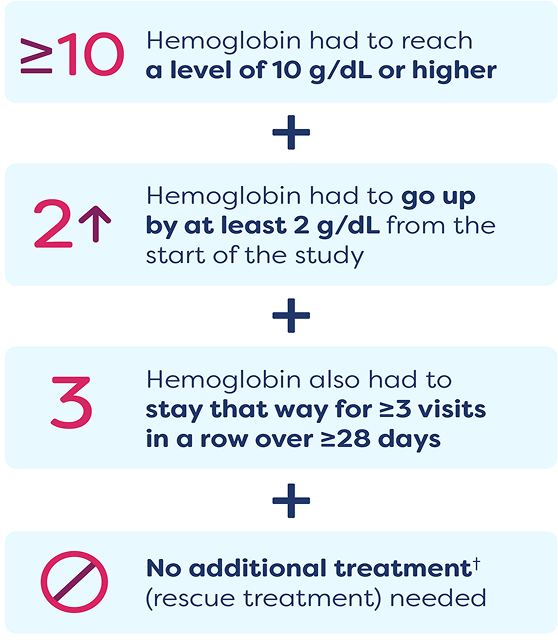
†No additional treatment means no rescue treatment (extra treatment) was given by a healthcare provider based on worsening signs and symptoms of wAIHA.
More patients taking IMAAVY achieved improved hemoglobin levels without the need for additional treatment vs placebo in a 24-week clinical study
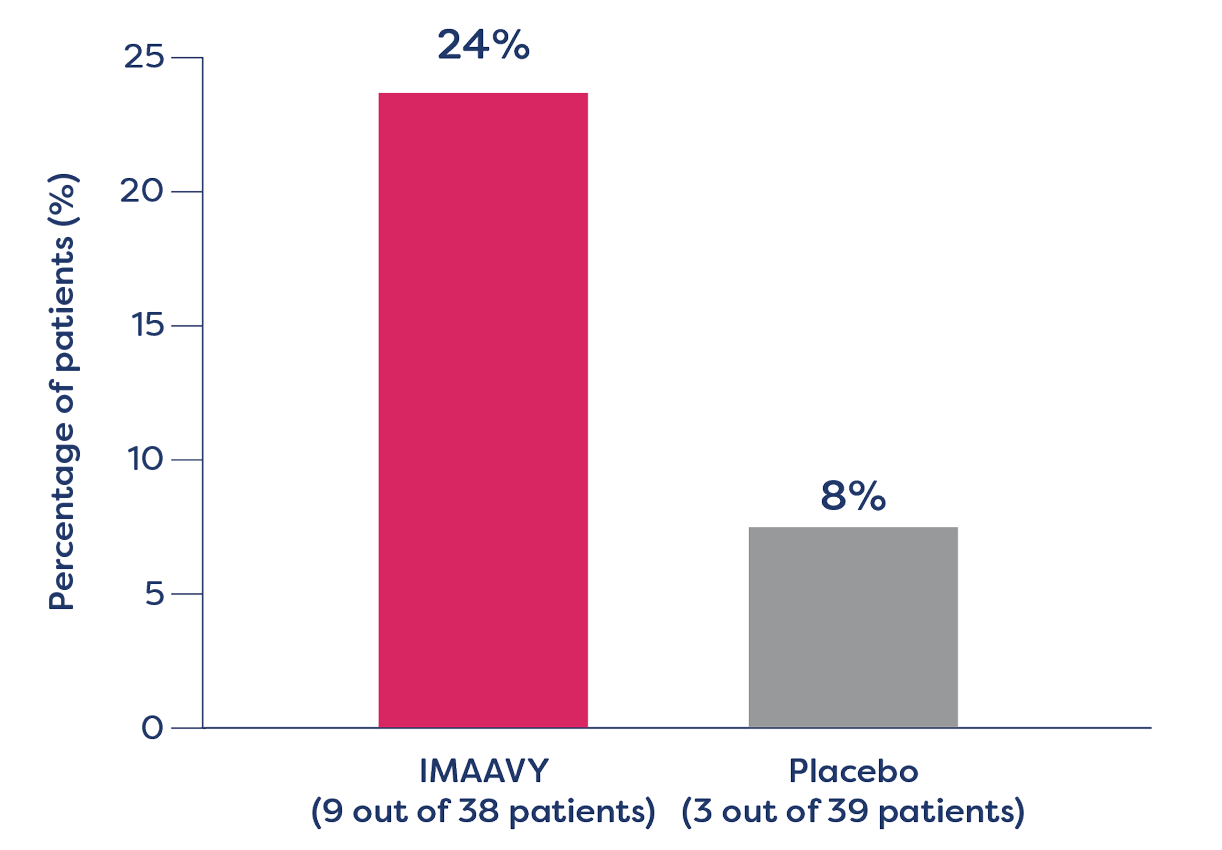

3 times more patients met all 4 study measures with IMAAVY vs placebo

Individual results may vary. Talk to your healthcare provider to see if IMAAVY is right for you.
In the clinical study, patients also experienced the following results:

After 1 week, some patients taking IMAAVY saw their hemoglobin levels increase. An average increase of 1 g/dL was observed in patients taking IMAAVY.
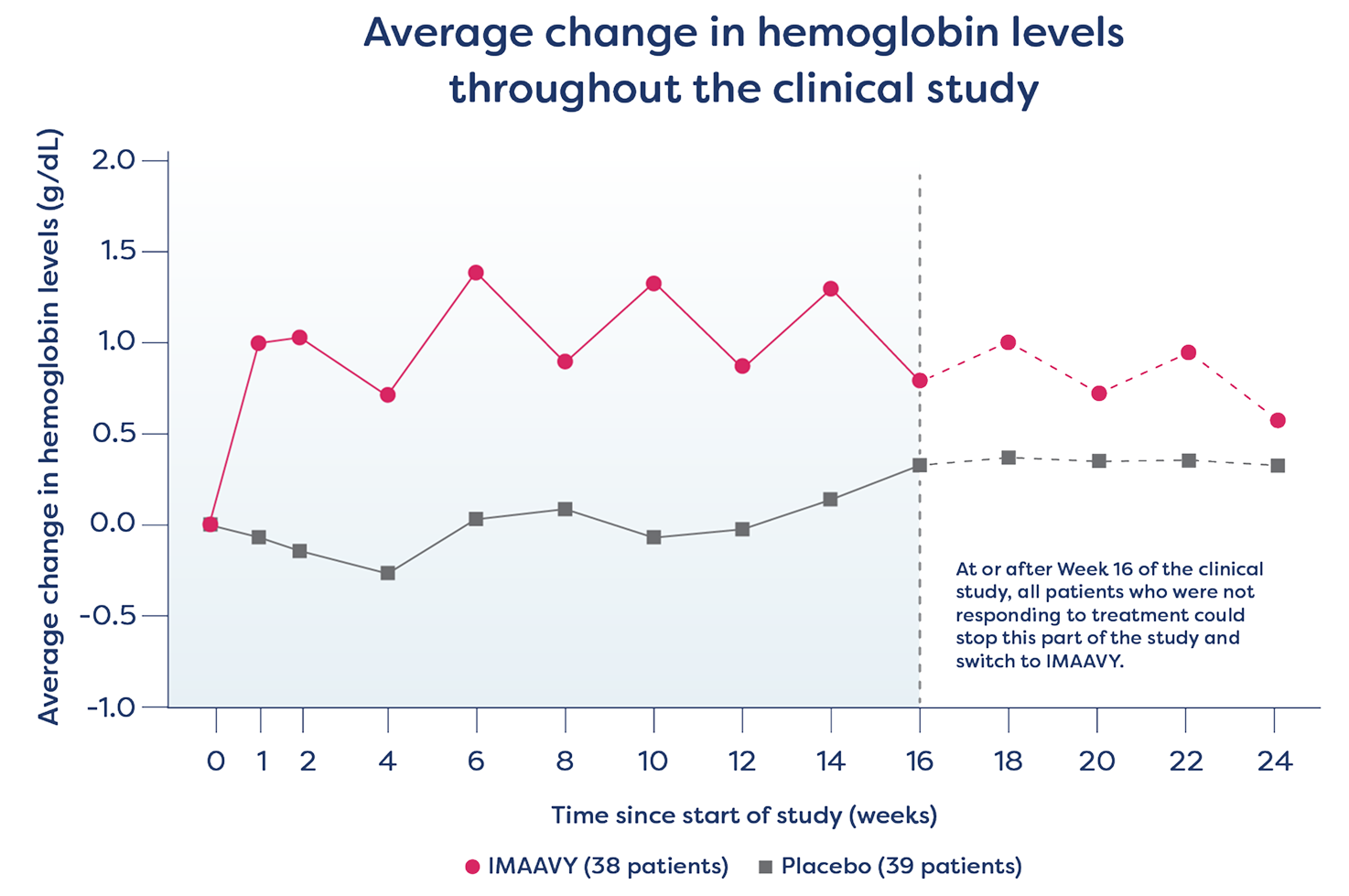
For this graph, if a patient stopped treatment or needed additional (rescue) treatment before Week 24, their results after that time were treated as showing no improvement from the start of the study.

61% of patients taking IMAAVY had a hemoglobin level of at least 10 g/dL and an increase of at least 2 g/dL from the start of the study. This happened at one or more visits by Week 24 of the clinical study.
15% of patients taking placebo had this result.
These results were not the main goals of the study and cannot be given the same importance as its main goals. Not all patients may achieve these results.
Talk to your healthcare provider to see if IMAAVY is right for you.
Impact on
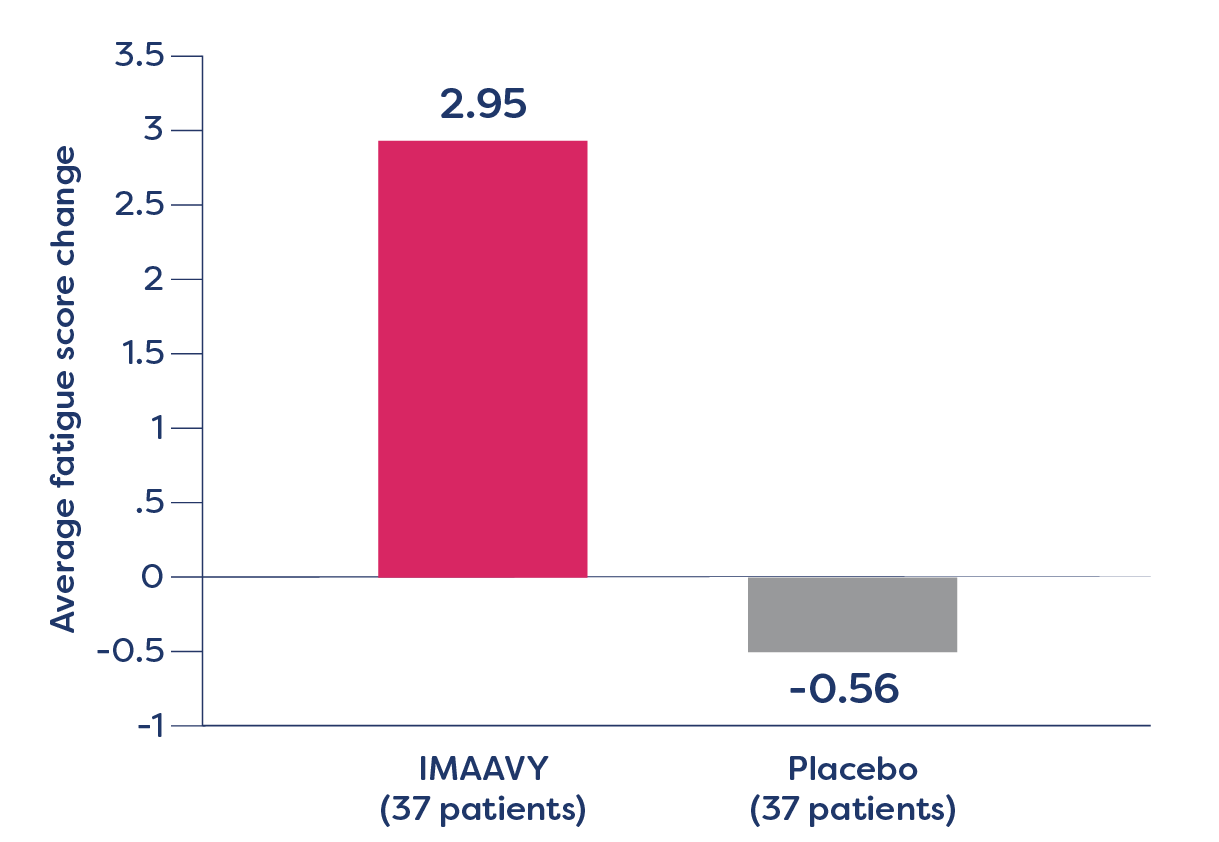
At 24 weeks, the average change in fatigue score‡ was 2.95 points with IMAAVY and -0.56 points with placebo
‡Average fatigue score was measured using the FACIT-Fatigue Scale. FACIT stands for Functional Assessment of Chronic Illness Therapy. It’s a 13-item questionnaire where patients indicate their level of fatigue from the past 7 days. It includes 5 statements related to fatigue symptoms and 8 statements related to the impact of fatigue on functioning. Total scores range from 0–52, with higher scores indicating less fatigue.
The fatigue data were not the main goals of the study and cannot be given the same importance as its main goals. Not all patients may achieve these results.
Talk to your healthcare provider to see if IMAAVY is right for you.
Be wAIHA wise!
If your healthcare provider has not asked about your fatigue in detail, consider bringing it up at your next appointment. You may also want to ask about the FACIT-Fatigue Scale.
Side effects and safety profile of IMAAVY
IMAAVY is a prescription medicine that may cause serious side
effects, including:
The most common side effects reported in people with wAIHA treated with IMAAVY were:






Once you and your healthcare provider have decided that IMAAVY is right for you, IMAAVY withMe is here for you and your loved ones with free personalized support when and where you may need it.
Sign up for supportNot ready to sign up yet?

